

Watering houseplants in winter: 6 rules that save the leaves
In winter plants drink less, while radiators dry the air. Here is how to water from November to February without overwatering or letting them dry out.
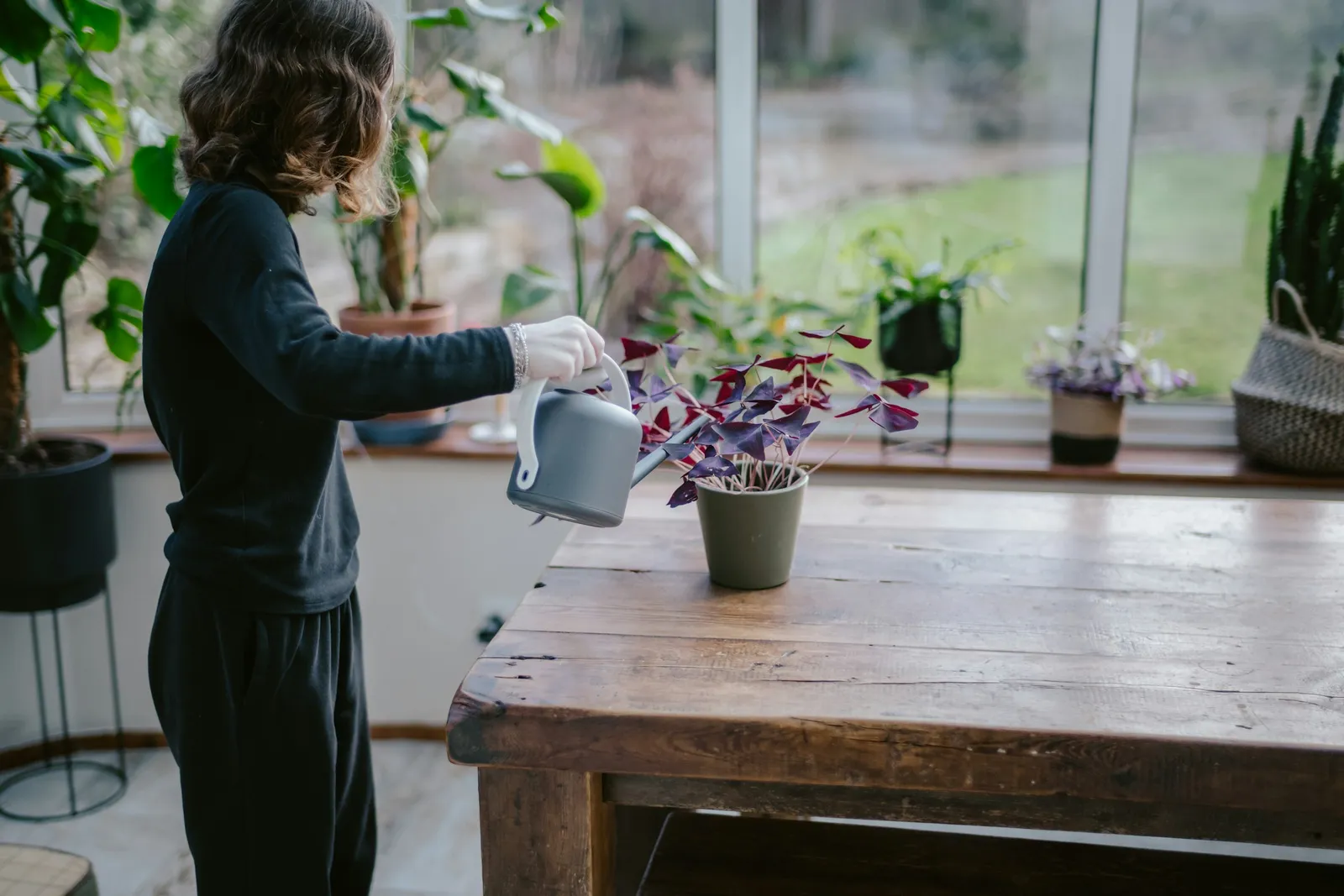
From November to February most houseplants slow down. Days are short and there is less light, so a plant uses less water. The most common winter mistake is watering on a summer schedule.
6 rules for watering in winter
- Check the soil, not the calendar. Push a finger 2–3 cm into the soil. If it feels damp, wait a few days.
- Water less often, but thoroughly. Water should soak the whole root ball and run out of the drainage holes.
- Use room-temperature water. Cold tap water is a shock for the roots.
- Empty the outer pot after 15 minutes. Standing water is the quickest way to root rot.
- Water in the morning. The top of the soil then has the whole day to dry.
- Move plants away from radiators. Hot, dry air dries out the leaves even when the soil is wet.
How to tell what is wrong
Symptom | Most likely cause | What to do |
|---|---|---|
Yellow, soft lower leaves | Too much water | Stop watering until the soil dries |
Brown, crispy leaf tips | Dry air near a radiator | Move the plant, put a bowl of water nearby |
Limp, drooping leaves and dry soil | Too little water | Water thoroughly, ideally from the bottom |
Pale speckles and fine webbing | Spider mites, which love dry air | Rinse the leaves with lukewarm water, raise humidity |
When do plants need more water in winter?
The exceptions are plants that flower in winter, such as Christmas cactus and orchids with a flower spike. Poinsettias don't like drying out either. Check them more often, but the rule stays the same: soil first, then the watering can.